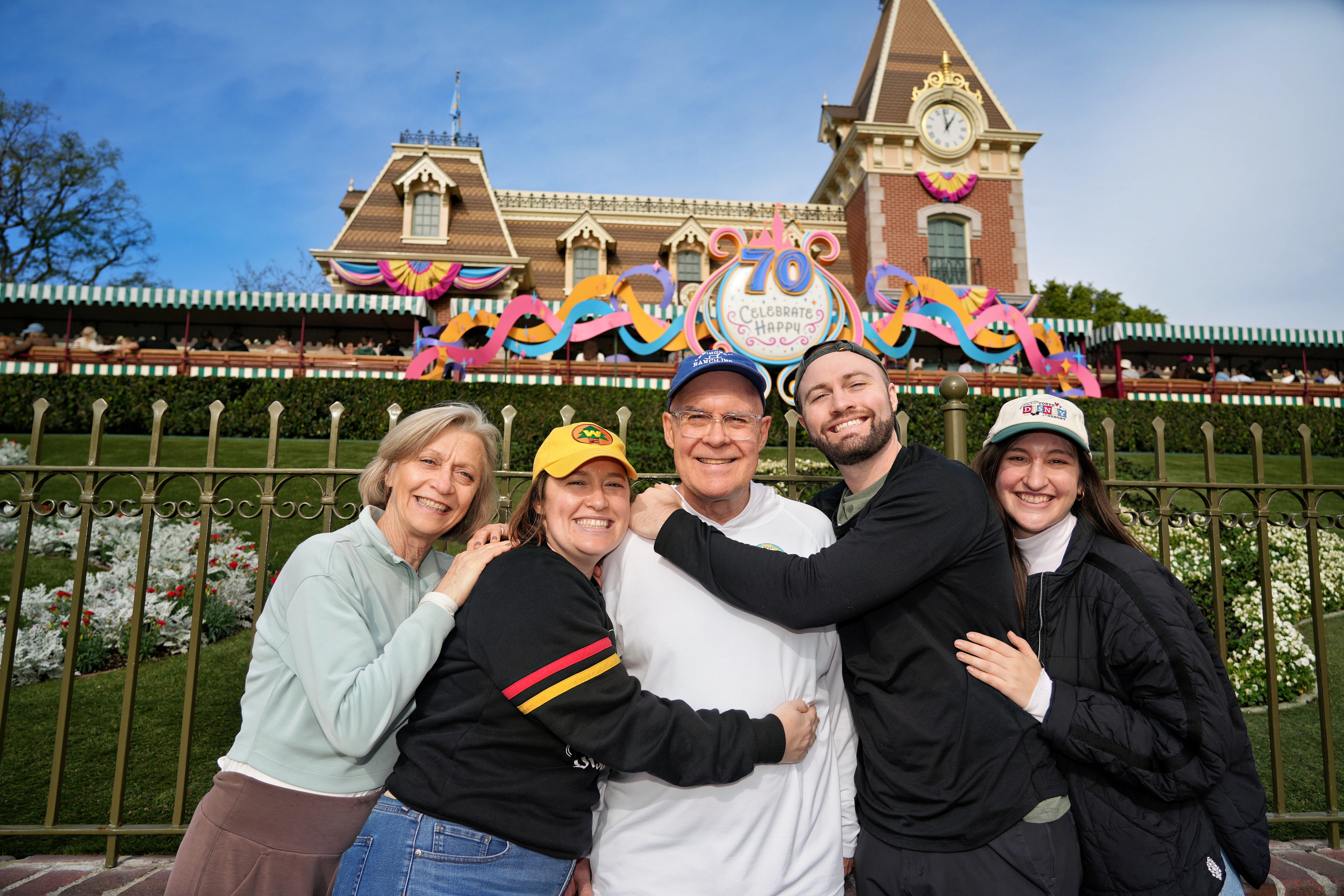

Welcome back to Slacker Stuff, a weekly column for professional creatives, heads of content, or anyone else aspiring to be a creative leader.
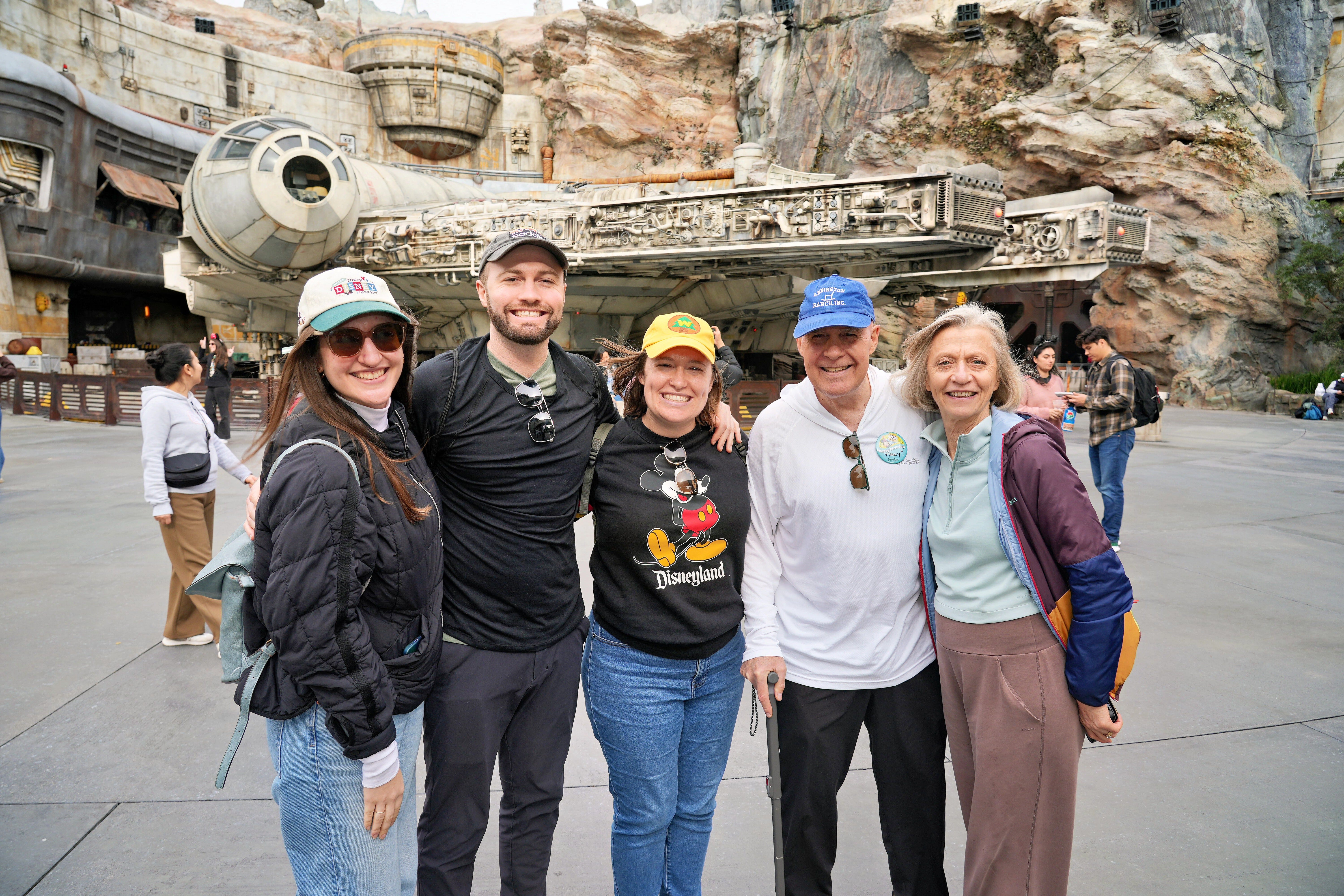
My dad turned seventy in August of 2025. Disneyland turned seventy in July of 2025. As a Disney “Enthusiast” (the layperson may use “Disney Adult”), I enjoy the fun fact that Tim and Disneyland are approximately the same age. We celebrated my father and, thus, Disneyland for their shared 50th anniversary, which was the last time my dad went to the park. Naturally, my sister and I decided to treat him and my mom to a trip recently.
I won’t regale you with my knowledge of Disneyland, but for reference, I think I could traverse the park with my eyes closed. I recently tried this out and I kind of scared myself… for example, if you’d like a corndog, you just have to walk through the entrance, under the train tracks, past the opera house on your right, through Main Street and there’s a cart that serves them between the end of Main Street and Tomorrowland on the right-hand side. I’m not sure what else to do with this information, so now you have it.
For all that familiarity, it’s not like Disneyland hasn’t changed. I first went to the House of Mouse at least 25 years ago - there’ve been numerous updates, including new lands and even parks, since then. One of the biggest reasons my sister and I wanted to bring my Dad back to Disneyland, aside from their shared age, is the major addition of a Star Wars land. My dad saw the original movie in theaters when it came out in 1977, and he’s been pretty good at keeping up with it since then. We were excited to show the man who introduced us to Star Wars the immersive atmosphere of this new expansion - rides, themed food, characters, and more, all from the Star Wars universe. There’s a full-scale Millennium Falcon, an accompanying ride, and another ride, which is perhaps my favorite ride of all, called Rise of Resistance.
It might surprise you to know that, aside from Disneyland, none of the names in what you just read are correct. There are longer, more specific names for the land and its rides. And it’s not just because of Star Wars - this name confusion happens all over the park.
For instance, on a previous trip, we got absolutely soaked on Splash Mountain, but, fortunately, the Cars ride wasn’t too long of a wait. We decided not to go on Grizzly Bear rapids for fear of getting drenched again, so we rode Soarin’ to close out that run of rides. Fans of Disneyland will know what rides I’m talking about, but none of those ride names are their official names
Splash Mountain → Tiana’s Bayou Adventure
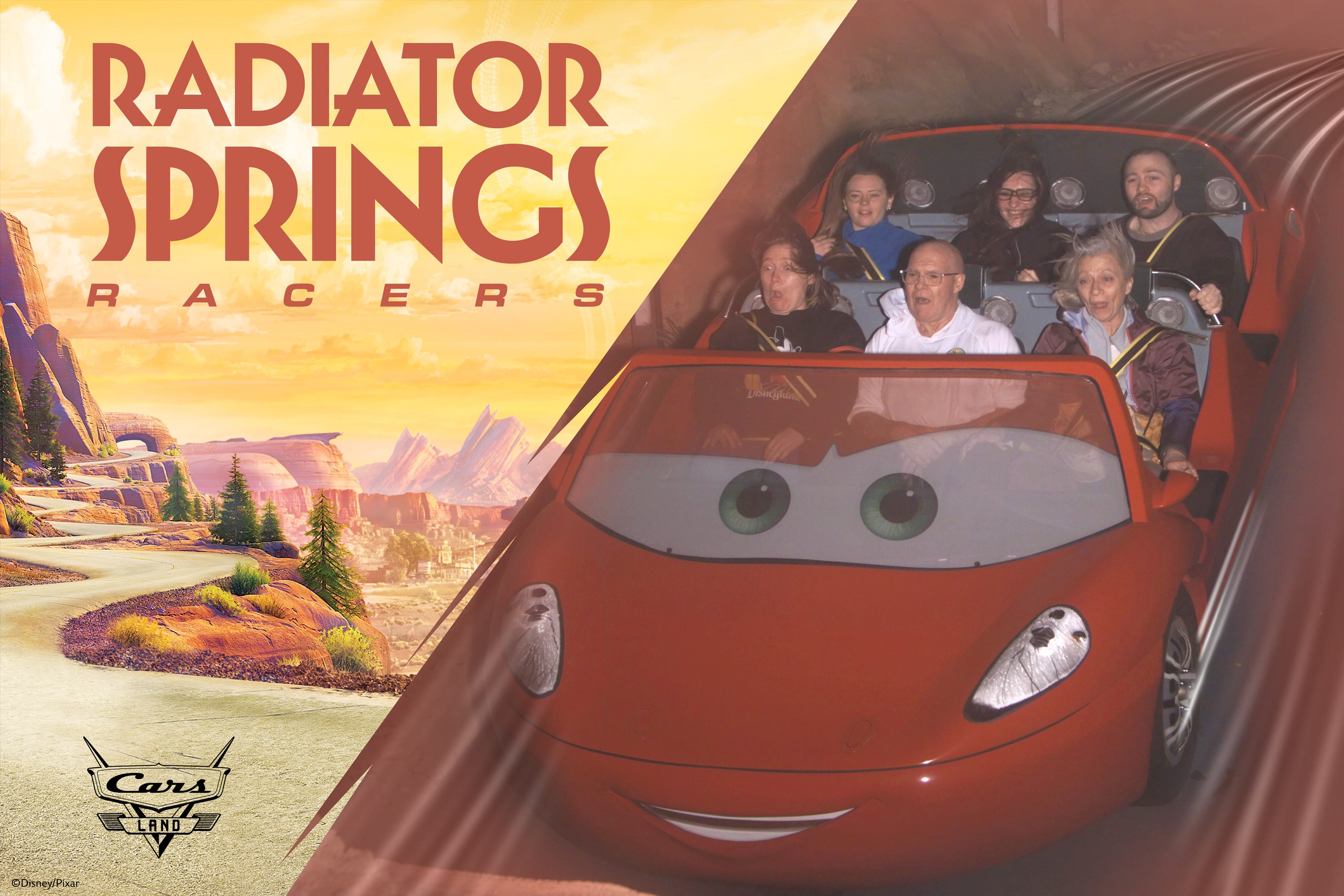
Cars Ride → Radiator Springs Racers
Grizzly Bear Rapids → Grizzly River Run (I convinced myself it was officially called the former)
Soarin’ → Same name, but seasonally it might be “Soarin’ Over California”
If I were to tell you a story of the trip with my dad and use the official Disney names, it would sound pretty mechanical. “My family and I enjoyed our trip to Disneyland Resort in Anaheim, California. We went to Star Wars: Galaxy’s Edge, which is in the village of Black Spire Outpost on the remote planet Batuu. We were thrilled to ride Millennium Falcon: Smugglers Run and Star Wars: Rise of the Resistance. Afterwards, we enjoyed a meal at Oga’s Cantina, where we all enjoyed an Angry Bloody Rancor.
Contrast that with “We went to the Star Wars land at Disney. There’s this cool Millennium Falcon ride and another dope Star Wars ride. We loved the Bloody Marys at the Star Wars cantina. It all felt right out of the movies!”
Even for someone who’s never been to Disneyland, the latter example doesn’t require that much extra explaining. While the former example is technically correct, I think it signals an inauthentic vibe. But I’m curious why Disney felt the need to be so specific. And why go through all the work to name so many things in Galaxy’s Edge, and then you’ve got a food stand called “Milk Stand” where I can get “Blue Milk”?
The question I’m left wondering is: why do brands insist on precision when people instinctively simplify?
Why Brands Care About Precision
Disney has been around for over a hundred years. In that time, billions of dollars have been spent to establish their brand. And this is partly what has made them so successful. A brand is essential for recognition; it allows a person or company to distinguish themselves from others using a myriad of tactics. When I think of Disney, I think of family-friendly, I think of the mouse (shoutout Mickey), I think of creativity (especially when it comes to theme parks). The word “brand” is thought to come from the practice established thousands of years ago when livestock or enslaved persons were marked by their owners with a hot branding iron. Perhaps it’s not the same, but if you think of Disney and close your eyes, I’m sure good ol’ Michael Mouse is staring back at you, burned into your retinas. You’re welcome for that horrifying visual.
While not visually scarring, there are some other freaky ways that brands can get ingrained in our psyches. If you look at your shopping list, did you list laundry detergent or Tide? What about soda or Coke? Baked whole-grain snack food crackers or Wheat Thins? A team of marketing professionals is punching the air with jubilation right now: all the ads and campaigns they ran were worth it just to end up on this Substack column.
Unlike its more visceral origins, brand recall and recognition these days don’t happen from one advertisement; it comes from multiple campaigns based on years of research. You know about Disney because they’ve been in the zeitgeist for over a hundred years. Each movie, artist, and sub-brand that has come from Disney during that time has reinforced the brand. And in recent years, it has taken on conquest, folding strong existing brands under its larger umbrella.
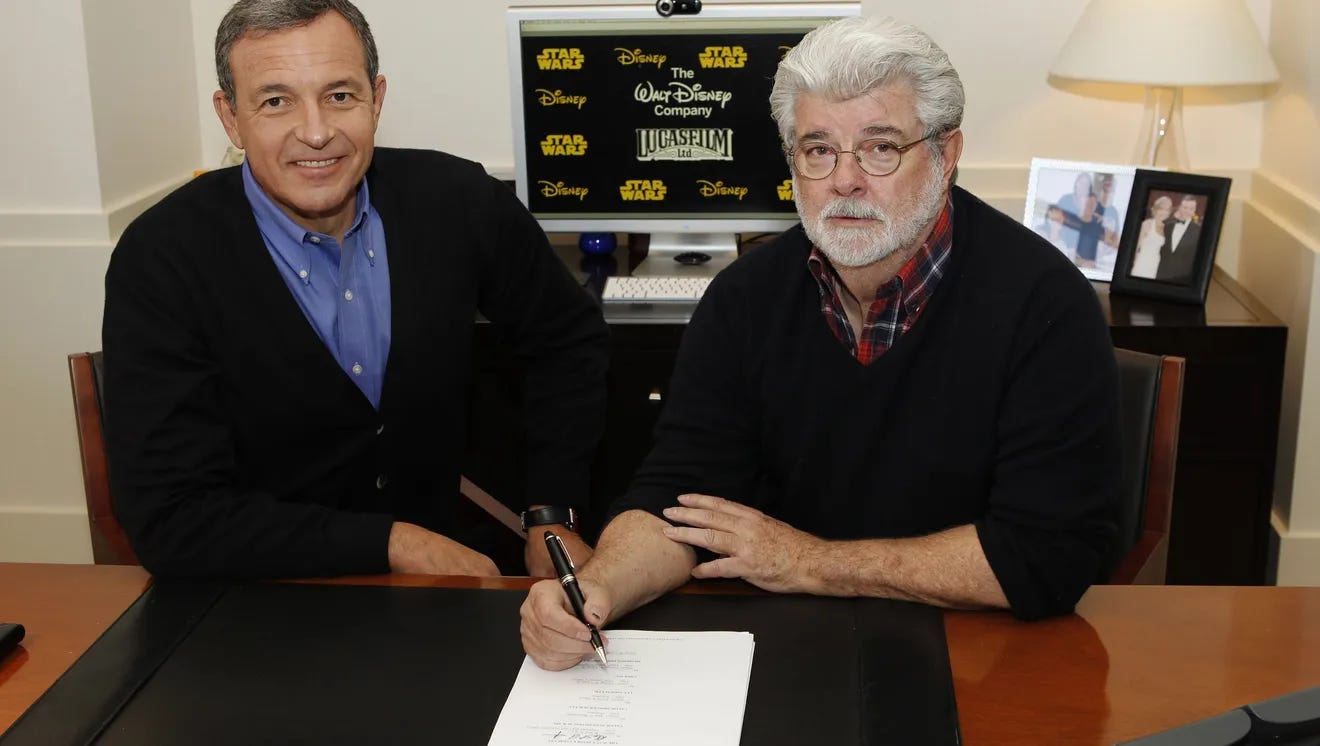
Star Wars was brought into the fold of Disney in 2012. Before that, it had thirty-five years and multiple films to establish its own brand recognition. Though the first movie may have been made on a shoestring budget, Disney ended up shelling out $4.05 billion to acquire Lucasfilm. George Lucas, already sitting pretty after capitalizing on the success of his IP with a lucrative merchandising deal, got a large chunk of that cash. After the first film came out, Lucas gave up his director fee for sequel rights and merchandising. Many would call this a shrewd move. I wonder what Bill Watterson would have done.
I don’t know that Star Wars and Disney are interchangeable, like Coke and soda. But Disney has successfully folded the Star Wars brand into their “brand hierarchy.” And they’re just one of many IPs Disney has acquired over the years. ESPN, Marvel, Pixar… all now sub-brands of Disney. I’m sure my family is one of millions in the last year that spent thousands of dollars at Disneyland to experience the Star Wars brand in person. And if it wasn’t for Star Wars, someone was shelling out for the Marvel experience or to let their kids meet Bluey. These sub-brands benefit from the Disney recognition and recall as their revenue ladders up into Disney’s pockets.
But with all this, I don’t think they’d care to be so specific in their naming if it was just about brand recognition. They know, like we know, that the difference between Disney and Disneyland isn’t going to keep people from visiting the parks. So, while I might take joy in the parks calling it something like “Laser Town” instead of “Star Wars: Galaxy’s Edge”, there’s another reason for Disney to be specific: immersion.
Immersion vs. Recognizability
Since its beginning, Disneyland has been a place designed for everyone. While you may associate it with being a place for children, Walt Disney himself said this was not the case. When asked about his films in a BBC interview, he said, “You have to appeal to the adult… the Adults have the money, the children don’t have any money”. More delicately, when talking about the origins of Disneyland, Walt expressed a desire for a place where he, too, could have fun alongside his young daughters.
One of my favorite things to experience at Disneyland, and the feeling that keeps bringing me back, is the escapism. It happens at least once every trip, whether I’m imbibing a signature Disney cocktail or singing along on the Little Mermaid ride, where I forget where I am. Reality melts away, and I’m not worrying about the world or if the money I’m spending is worth it. I’m sure nostalgia plays into this as well, as I yearn for the innocence I once felt attending the same park as a child.
But Disneyland is not just for freaks like me who know where they keep all the corndogs. Disneyland is meant to appeal to as many people as possible. By capitalizing on their various IPs, Disney provides a world where folks from two to two hundred can exist in the same place, enjoying themselves in exchange for the price of admission.
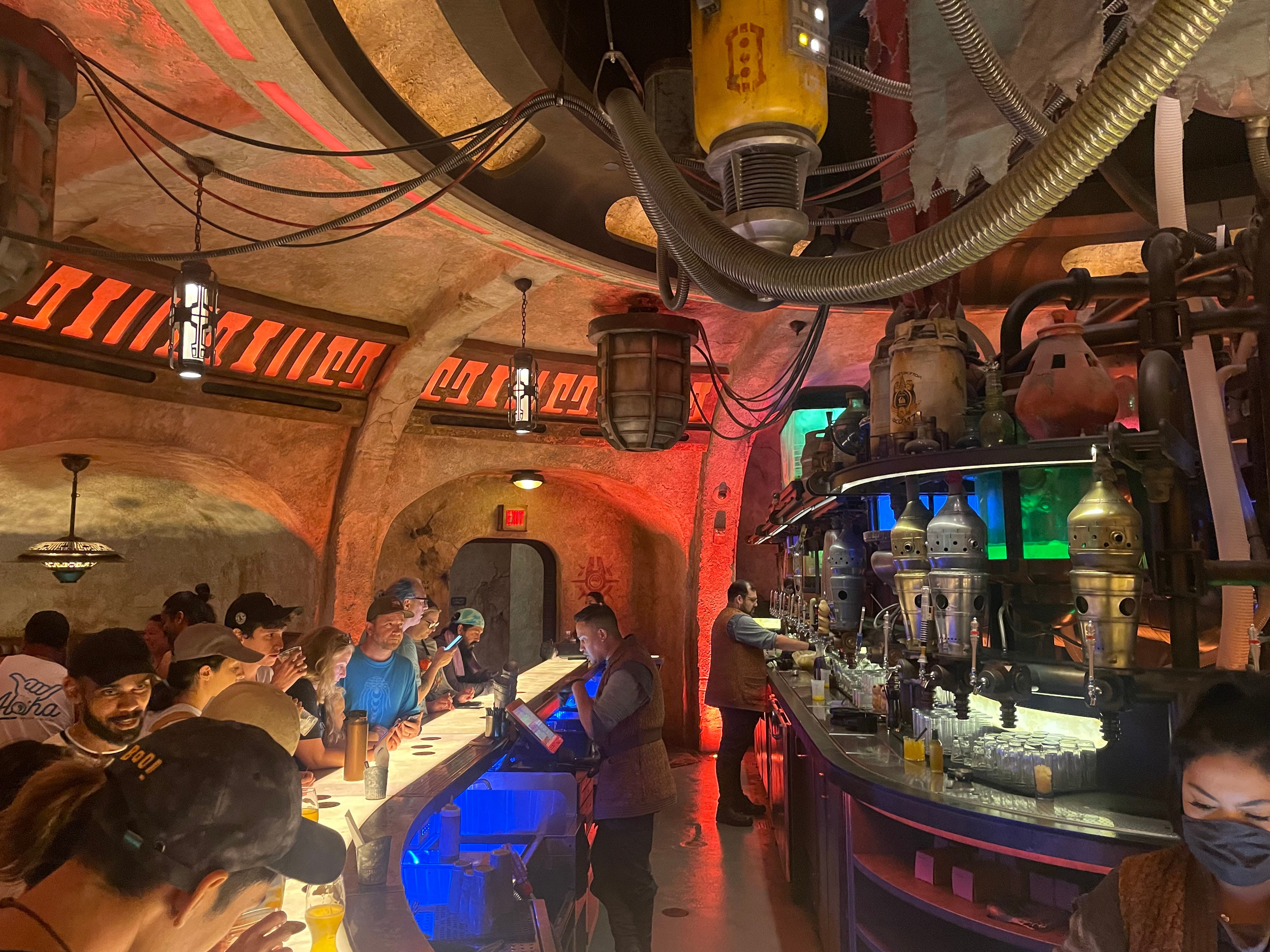
Could Disney get away with naming their land “Star Wars Land” and having simpler names for the things that exist in the land? Sure. In California Adventure, Disneyland’s sister park, there’s an entire land dedicated to the “Cars” film franchise that’s simply called “Cars Land”. Perhaps Disney could get away with calling “Galaxy’s Edge” “Star Wars Land”, but for the dedicated fans, the specific names provide a level of immersion that deepens the experience. “Cars Land” doesn’t require the same level of immersion as its audience represents a younger demographic.
There’s a level of detail that Disney can go to that is rarely matched. Star Wars fans are, to put it lightly, nerds. We (I say, begrudgingly, as one of them) have deep knowledge of the lore and canon and enjoy discussing the details amongst one another. I’ll get ahead of it and admit that Star Wars fans can be overzealous, which I find grating at times. Why don’t we all just settle down and share a glass of Blue Milk?
Development of Galaxy’s Edge began soon after Disney acquired Lucasfilm. They could have very easily phoned it in and opened up a cheap land with carnival rides and basic food stuffs with the Star Wars label on them, but that’s not the Disney Way. At the very least, they learned their lesson after spending $1.1 billion to re-imagine California Adventure only a few years after initially cobbling together a paltry excuse for a theme park.
While there are many worlds within the Star Wars story that Disney could have selected from, they created a new world for all guests to enjoy. While nerds like me might have enjoyed podracing on Tatooine or riding swoop bikes on Endor, Joe and Suzy from South Dakota might just want to experience a world different than their own. By creating Batuu, Disney could appeal to as many folks as possible.
They drew inspiration from real places like Istanbul, Morocco, and Egypt. They even took inspiration from Ralph McQuarrie’s original concept art for the original Star Wars trilogy. They spared no expense with the details. There’s even a product tie-in with Coke products, where the bottles sold in the land have been given an in-universe design.
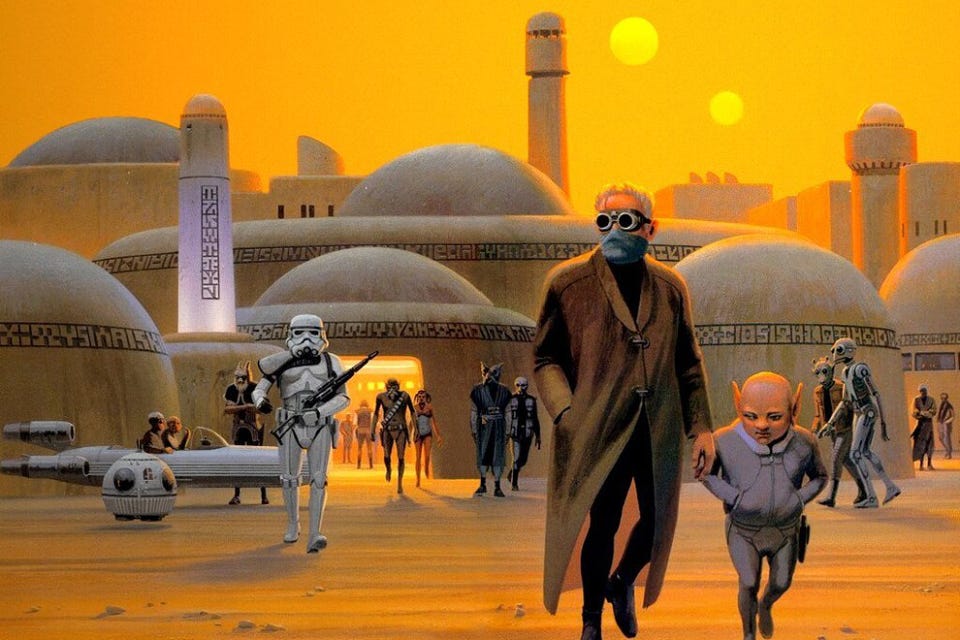
“Our intent is to make it feel as if you just walked into one of the movies... Bringing Star Wars to life in the physical world gives us the opportunity to play with a whole bunch of things we’ve never done before... to really engage all of the senses. What does that street feel like? What does that animal smell like? What does blue milk taste like?” - Scott Trowbridge, Senior Creative Leader at Disney
There are actually two versions of Star Wars: Galaxy’s Edge: one at the Disneyland resort in California, and another at the Disney World resort in Florida. When researching this piece, I was amazed to discover the level of detail they went to for each location. Because the two resorts face different cardinal directions and are on different latitudes, sunlight hits the land in different ways. To account for this, Disney designed each land with separate shades of paint and color schemes.
If Disney cares about how light hits its buildings, you know there was deep thought put into the naming. Labeling it “Star Wars: Galaxy’s Edge” and placing it in the village of Black Spire Outpost on the planet of Batuu puts you, the guest, in that world. Star Wars Land could be anywhere, and you’re not just anywhere. They didn’t stop there - they crafted a deeper narrative than just names. Galaxy’s Edge is set between the films of Episode III - The Last Jedi and Episode IX - The Rise of Skywalker. The characters that you interact with in that land, the stories that take place, all exist in a specific time and place. It adds another level of immersion, and while a dork like me has the context to understand the full picture, Joe and Suzy from South Dakota may visit Galaxy’s Edge and finally be inspired to dive deeper into Star Wars lore. Just as Walt said, it’s designed for both the adults and the kids (I’ll let you decide who’s who in this scenario).
Are Brands “Personal”?
My Substack friend Hannah Jay has a wonderful piece on personal brand. There’s a particular quote that struck me:
“But the internet has decided that mystery is a liability. That ambiguity is a flaw. That if you can’t explain yourself in one sentence, you don’t deserve attention. So we compress ourselves. We sand off the strange edges. We rehearse the same three stories until they harden into identity.”

Disney has a hardened identity, but then again it’s been around over 100 years. Star Wars didn’t exist when Walt first started dreaming up Main Street, U.S.A. So if a brand like Disney can shift, does the same have to be said for people? I’ve had numerous “brands” that I’ve developed for myself over the years to define my work. I understand that, in order to build an audience from which I can monetize my work, I can get there faster by fitting into a niche. But this compromises my work, it encourages me to make decisions that fit into a box of familiarity instead of the weird nuances that make up who I am. I need to figure out how to embrace and talk about my personal Batuu.
Meanwhile, it brings me great joy to walk through Disneyland. I’m excited by the new projects and expansions that are seemingly always on the horizon. I’m not trying to go to bat for the Disney corporation and defend everything they stand for, I’m just grateful I get to experience it in my own way. Isn’t that why the details of Disney matter?
By getting to a level of precision, Disney has made it possible to appreciate a world as a unique experience. People from all walks of life who speak any language can absorb the details in their own way. You get to be the main character, whether that’s riding every ride, playing pretend with the characters, or any other combination of variables.
I’m not conscious of the proper naming conventions as I ogle the Millennium Falcon. I’m mostly in awe that something I saw as a kid on a TV screen actually exists in the real world. It’s right there in front of me, my imagination came true.
The trip we had to celebrate my Dad is one that I will never forget. It ultimately didn’t matter what we called the various rides and restaurants because it wasn’t about them: it was about us and our shared experience at Laser Town
Whoever you are, whatever galaxy you’re from, I’m glad you’re here.