


Welcome back to Slacker Stuff, a weekly column for professional creatives, heads of content, or anyone else aspiring to be a creative leader.
Lamenting the Volvo
Growing up, one of our family cars was a 1998 green Volvo V70: light leather interior, automatic transmission, with a nose that scraped the pavement of even the most shallow driveways. But most importantly, it had a third row, a very special kind of third row, with fold-up seats that faced not forward, but backwards. These were my favorite seats, making faces at drivers, pretending I was driving when the car was in reverse, and playing with toys, inventing my own stories and narratives.
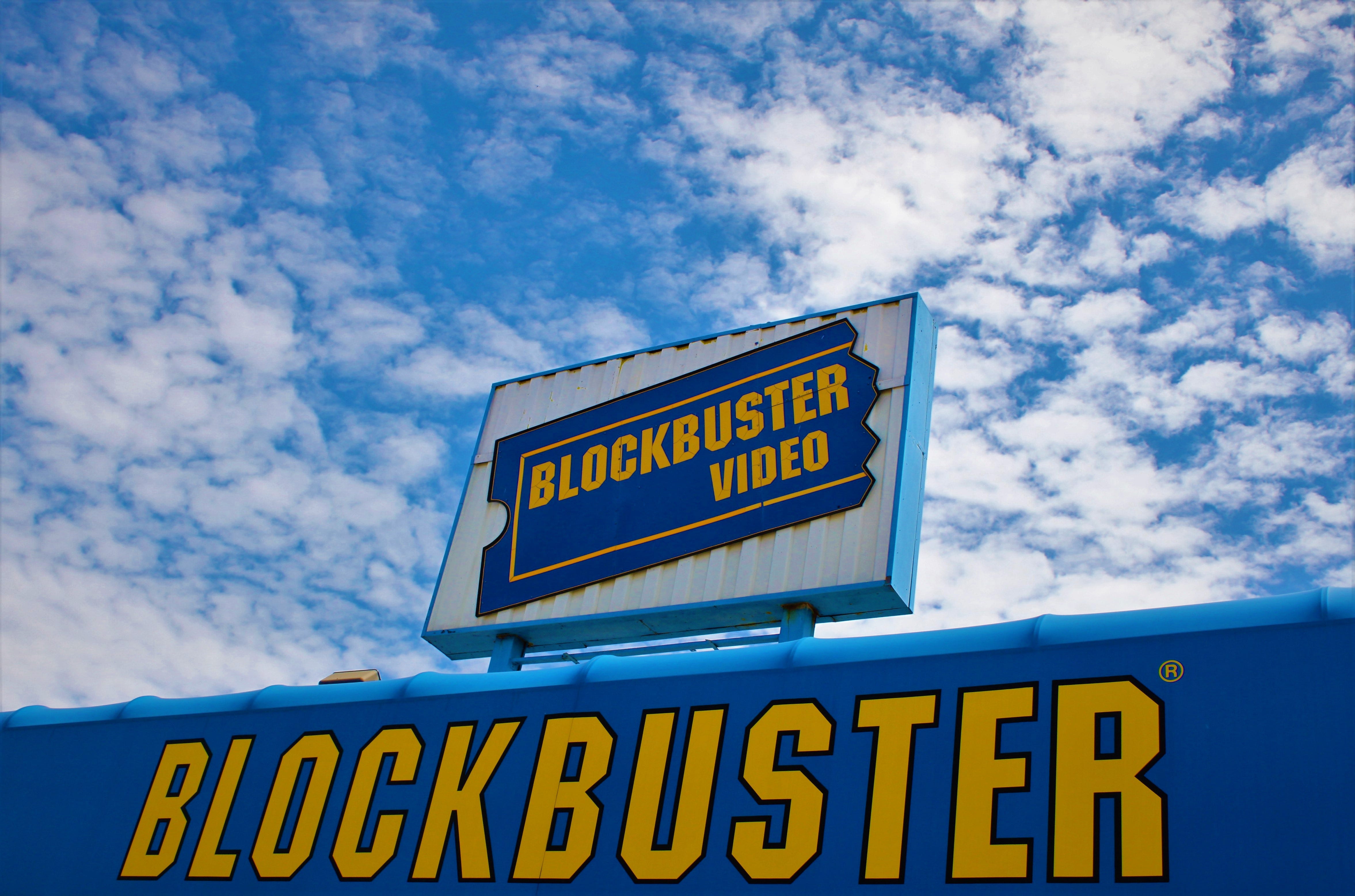
We would pile into this car and drive less than a mile away to the place that had more stories than you could possibly imagine. I’d open the trunk, exit the car, and make a beeline for the entrance. Inside the store, I was let loose, searching the aisles for a movie to watch or a video game to play. I remember seeing the case for Jack Frost, a heartwarming Christmas fantasy, right next to the case for… Jack Frost, a black comedy slasher film. A mix-up there definitely contributed to the insomnia I wrote about previously.
Blockbuster was a place designed for entertainment that was, importantly, not in my home. The selection of films wasn’t determined by an algorithm; real-life, breathing humans organized the shelves, drawing folks in with their hand-crafted design. I would see many movies there that inspired my own stories in the Volvo’s backseat. Blockbuster is where I first saw Back to the Future, a movie that had a profound impact on my career. It was at Blockbuster that I realized, “Wait a second, there are TWO more movies?” Because the store only had so many copies, though, the second movie was already checked out when I went back to learn more about what happened with Marty and Doc. I actually ended up watching the third one second… and the second one third… kind of playing into the whole time travel device encapsulated in the movies themselves.
Today, if there’s a movie I haven’t seen, I just open up the streaming service of my choice and make a selection. And if I don’t know what I want to watch, there are algorithms learning about my preferences, serving me up stories that some computer somewhere thinks I might like. What happened to all the people who did that for me?
What Blockbuster Was (Beyond a Rental Store)
Blockbuster began 40 years ago in Dallas, Texas. It was not the first video-rental store, but it became perhaps the most recognizable chain, employing over 80,000 people and operating over 9,000 stores across the globe at its peak in 2004. Blockbuster’s rise and fall happened almost entirely within my childhood, initially expanding in the 90s when I was born and closing the last of its company-owned stores in 2014, two years after I turned 18.
The video store was a physical location where you could figure out what movies were relevant or discover under-represented classics that time may have forgotten. I miss the friction of it. If I wanted to watch something new, I had to leave the house, travel the distance, and go to the place where movies were kept. Today, I can (and do) consume entire TV show seasons in a weekend without leaving my couch. I recently did this with Gilmore Girls. I had some thoughts.
As much as I miss Blockbuster, I don’t want to set myself up to worship a corporation that only cares about money. Ultimately, I believe that’s what contributed to Blockbuster’s downfall (which I’ll touch on later), but because they had such a grip on the supply of movies, I can’t forget the memories it represents. Not just roaming the aisles, looking for my next favorite movie, but the playdates and family movie nights that were built around the trip to Blockbuster. It served as an extension to fun that was already being had, not the crux of enjoyment for a whole day.
I’m certain I’m not alone in the fondness I feel for the video store. Yes, Blockbuster was a source of entertainment, but its cultural place in history must not be forgotten. I’m sure the employees that we interacted with may not have had the same passion for films as famous directors or critics, but their remit required them to show up and help their guests find something good. It’s something you may only be able to find today at the library or one of the few video stores that still exist. But your need for entertainment does not have to be satisfied by a trip to one of these institutions. You have everything you could ever want at the tap of your finger.
Blockbuster Optimized for Revenue, Not Culture
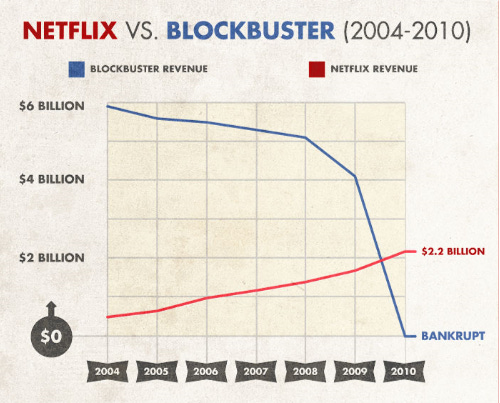
Beyond being a source for entertainment for the average consumer, Blockbuster, and other video stores like it, represented a second opportunity for films to earn revenue that had had a theatrical release. It was almost like opening the movie for a second time. The revenue model shifted over the existence of Blockbuster. Initially, video stores had to shell out around $65 per videotape to distributors and would keep the roughly $4 per rental as pure profit. So, profitability for a video store really depended on the careful balance of how many tapes were purchased and renting enough to exceed the upfront cost.
Blockbuster’s real bread and butter for a while was late fees, a tax of $1 for each day the video was late beyond the initial rental period. The fee did not make folks happy. One guy even had a copy of Apollo 13 out for six weeks past the due date because he misplaced it… The $40 fee enraged him so that he decided to start a video rental company with a different business model, where one could order DVDs in the mail. It was like some kind of internet flick watching website. A “Net-flix” if you will (and I shall).
This business model changed a bit with the rise in popularity of the DVD, as disks were much cheaper to manufacture at scale than VHS tapes. With this model, the rental store would pay distributors a portion of rental income in exchange for a cheaper up-front cost, bringing the price-per-unit down to as low as $8. This made it possible for more copies to be available too… yet I still had to watch Back to the Future III before II. Make it make sense, Blockbuster.
Even before Netflix arrived on the scene, Blockbuster wanted to dive into the video-on-demand world. They entered into a partnership with a company to launch the service, and trials began in the early 2000s. The initial plan was to “provide on-demand entertainment, including movies, games, television programs, sports and music, to consumers’ television sets.” Users could start watching whenever they wanted, they could access films on demand as long as they had a broadband connection. The deal was for 20-years… but ended merely months after the announcement when the other company filed for bankruptcy. That company Blockbuster partnered with? Enron.
In an LA Times interview, analyst Ron Barone said of the initial deal, “Enron is the leader of the pack and I think this could be the beginning of streaming of content over its network… Signing a company like Blockbuster is a reassuring signal of the validity of their strategy.”
But fear not! Another deal was presented to Blockbuster to help them dive into a new, exciting world of mail-order movies. Reed Hastings, the Apollo 13-losing man inspired to rival Blockbuster out of spite, approached them with a deal: “Fifty-million dollars and you can have the whole thing.” Hastings was essentially laughed out of the room without even receiving a counteroffer. Right now, you can watch a TV show about the last Blockbuster in America only on Netflix.
Platform Blindness and Cultural Damage
Last Christmas, my cousin asked our family, “Why aren’t movies good anymore?” I don’t think it’ll surprise you to learn that I was ready with an answer and it centered, in part, around Blockbuster. Like I mentioned before, film studios saw the rental period as a second opportunity to earn their money back after a movie was released in theaters. In his appearance on Hot Ones, Matt Damon sums it up perfectly:
Matt Damon himself was a product of the thriving independent movie world of the 1990s. Movies made for peanuts that couldn’t afford a wide-release had a second chance at success by entering the video rental market. It was just a different way to see a movie, cheaper for the consumer but a second chance for guys like Matt to “make it.”
Modern auteurs like Quentin Tarantino and Steven Soderbergh benefited greatly from the video store model, and not just because of the second chance at success for a movie. Video stores were a “launch pad” of sorts, serving as a kind of cheap film school for budding filmmakers. You could rent a movie and consume all the extras, including director commentary, bloopers, and other behind-the-scenes content that wasn’t available in the movie theater. Today, some of that exists on YouTube, but the DVD extras feel like they still only exist for crazy people like me who still buy physical media.
Streaming favors “binge-watching” TV shows. It feels like we’re all probably watching more media these days, but fewer independent titles. It’s easy to consume an entire season of your favorite TV show when you don’t even have to get up off your couch. You get familiar with characters and melt into a world as it’s established over multiple hours. Contrast that with spending the same amount of time watching different movies, and you can see why the competition isn’t fair. Each movie has to grab you, pull you into its world in a shorter amount of time. If people don’t watch it, the algorithm makes sure it gets banished to the bottom of suggested watches.
Streaming also means the content is cheaper to consume, and less money goes back to the artists behind it. Studios compromise on taking risks on new stories and instead drill repurposed IP into their offerings because they think “hey, remember that thing you like? Well, here’s more of it!”. I wish it weren’t so, I wish they could all be like Bill Waterson.
I was excited by my cousin’s question, but I also don’t think they were asking the right question. I don’t think it’s a matter of movies being worse now; I think it’s a matter of consumer behavior changing. Because media is so prevalent, so available to us wherever we might go, fewer gems are able to rise to the top. Netflix has said that their greatest competitor isn’t other streaming services, it’s YouTube. YouTube dominates “watch time”, commanding more TV time than any other media provider in the United States. In February of 2025, 11.6% of all TVs streamed YouTube. Netflix trailed at 8.2%. You can still go to the movies, but chances are you’re more likely to consume media in the comfort of your home.
There’s so much competition that exists out there for movies. A single movie isn’t just fighting with other films for your attention; it has to contend with music, podcasts, amazing Substack columns like this one, or sick YouTube channels like this one. While video stores still exist, they are no longer the gatekeepers to entertainment. Because of this flood of content, only those films that are truly great can break through the noise of the competition and make an impact. Otherwise, you’re left with whatever schlock the algorithm gives you to devour.
What’s Missing Now
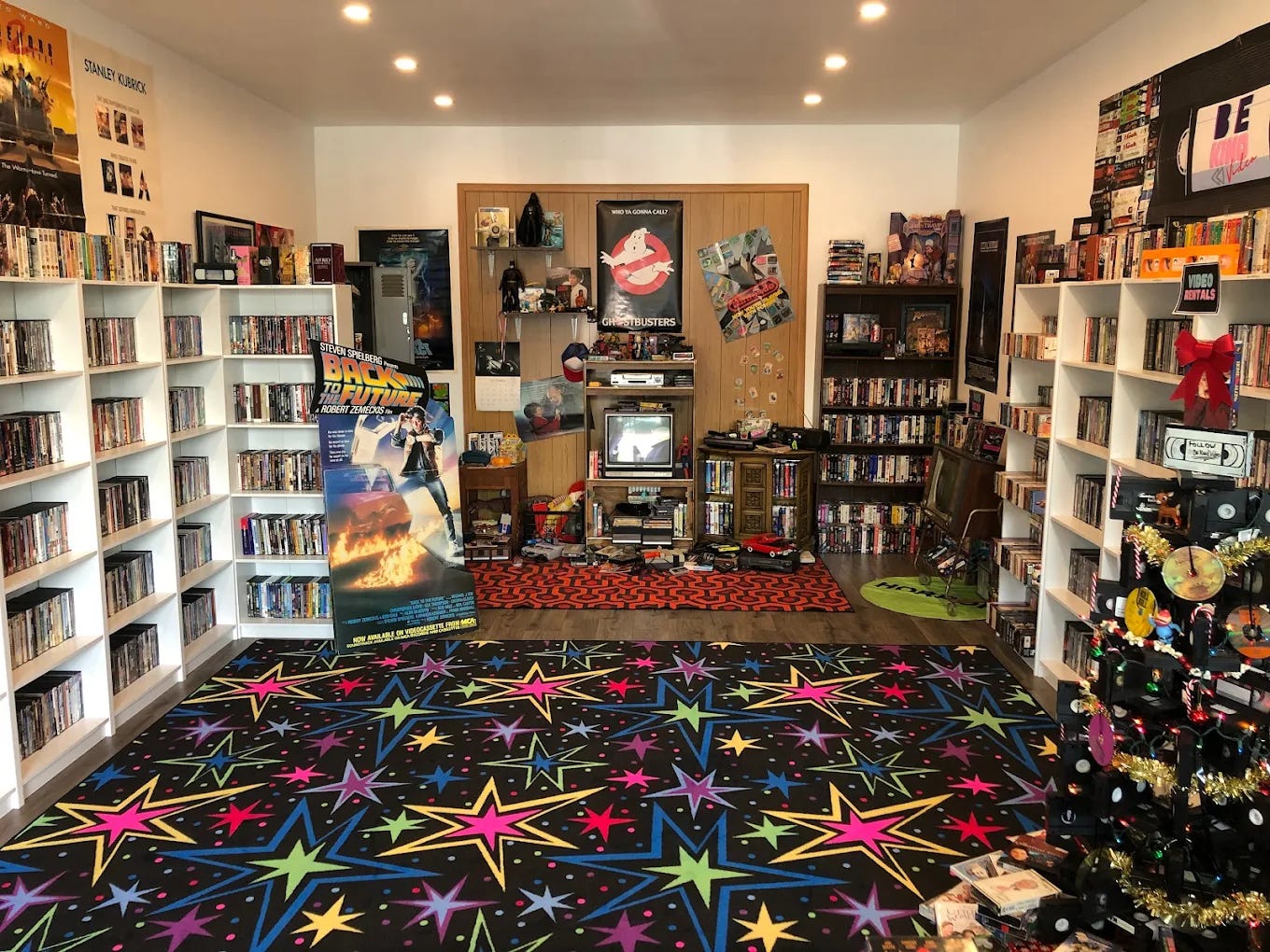
Shortly after Blockbuster shut its doors in 2014, we coincidentally said goodbye to that green Volvo station wagon. I hate to be sentimental about an inanimate object, but I miss that car just like I miss browsing the dusty aisles of Blockbuster.
Because I work from home, there are some days where I barely leave the house. I’ve had to force myself to create routines that require me to see the sun, something my doctor is surely grateful for with my low vitamin D levels. I’ve ventured out to the library to see what movies are available. I’ve also started my own blu-ray collection, as there’s no guarantee that any of these streaming services will keep titles available forever. I’ve even frequented the independent video store that, miraculously, still exists nearby.
Blockbuster’s failure wasn’t tragic because it died; it was tragic because nothing replaced the role it played. A common place to access movies isn’t the only loss of human connection we’ve had… Delivery and ride-hailing apps also keep us isolated. There are fewer reasons to leave the house to eat or interact with humans on public transportation. Moving through the world is important for mental health; it’s an empathetic reminder that “hey, someone made this happen.” A Blockbuster employee begrudgingly pointing to the “Store recommendation” section might have felt impersonal, but a real person set up that display, a real person stocked it, and a real person advocated for shelf-placement.
I care about Blockbuster so much because it represents something that required me to physically leave my comfort zone and engage with my world. In a weird way, I’m grateful my apartment building’s laundry requires quarters because it forces me to go to the bank every once in a while and replenish my stores. Interacting with folks isn’t always pleasant, but I think we could all use the reminder sometimes of the value in human connection. What frictions are worth preserving? What places allow discovery without optimization? What spaces still require us to venture out into the world?
Let me know what you think
I’m glad you’re here.